

Hybrid AI Systems: Bridging Data, Algorithms, and Scientific Innovation
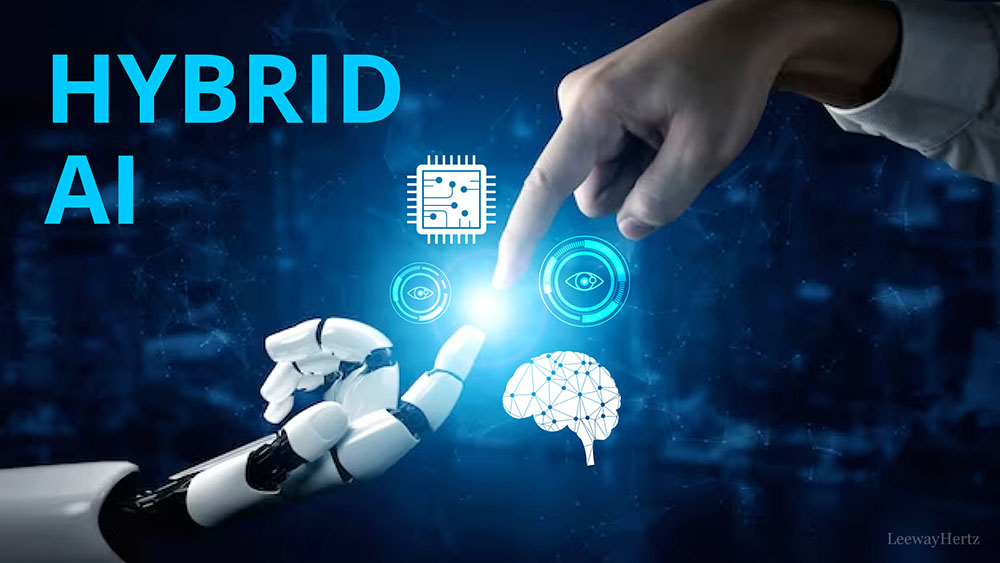
Hybrid AI systems represent the convergence of multiple artificial intelligence paradigms, combining symbolic reasoning, machine learning, and data-driven predictive models to address complex scientific and industrial challenges. Unlike traditional AI, which often relies on a single approach, hybrid systems integrate strengths from different methodologies to improve accuracy, interpretability, and adaptability. In research and innovation, this approach allows scientists to tackle problems that require both domain expertise and large-scale data analysis, bridging the gap between human insight and computational power.
These systems are particularly valuable in scenarios where data alone may be insufficient or noisy, and where reasoning and rules are essential to guide decision-making. By combining structured knowledge representation with learning-based models, hybrid AI provides a more holistic solution to scientific challenges, enabling researchers to generate hypotheses, validate models, and interpret results with greater confidence.
Integrating Symbolic and Machine Learning Approaches
Symbolic AI, rooted in logic and rules, provides explainability and the ability to encode domain expertise. Machine learning, on the other hand, excels at pattern recognition, prediction, and handling large datasets. Hybrid AI systems integrate these approaches to leverage the benefits of both. This allows researchers to model complex systems that are difficult to capture using purely data-driven or purely rule-based methods.
In scientific research, such integration enables more robust predictions and improved interpretability. For example, in drug discovery, symbolic rules can encode known chemical interactions while machine learning models predict novel molecular behaviors. This combination accelerates innovation, reduces trial-and-error experiments, and increases the likelihood of successful outcomes.
Applications in Environmental and Healthcare Research
Hybrid AI is increasingly applied in environmental monitoring and healthcare research. In environmental science, combining sensor data analysis with rule-based models allows for precise prediction of ecosystem changes, early detection of anomalies, and more informed decision-making. By integrating historical knowledge with real-time observations, hybrid systems improve the accuracy and reliability of sustainability models.
In healthcare, hybrid AI can assist in diagnosis, personalized treatment planning, and clinical research. Symbolic reasoning ensures compliance with medical guidelines and ethical standards, while machine learning analyzes patient data to uncover hidden patterns and predict outcomes. The synergy between these approaches enhances patient safety, improves efficiency, and supports evidence-based medical decisions.
Advantages of Hybrid AI Systems
Hybrid AI systems offer multiple advantages over single-method approaches. They improve generalization, reduce biases inherent in individual models, and provide a framework for explainable AI. By combining learning with reasoning, hybrid systems can handle incomplete data, adjust to new conditions, and offer insights that are both actionable and interpretable.
Additionally, hybrid AI promotes interdisciplinary collaboration. Scientists, engineers, and domain experts can contribute their knowledge to symbolic components, while data scientists and machine learning engineers enhance predictive capabilities. This collaborative approach ensures that the system benefits from both human expertise and computational efficiency.
Challenges and Considerations
Despite its promise, hybrid AI also poses challenges. Integrating multiple AI paradigms requires careful design, compatibility considerations, and computational resources. Ensuring interpretability and managing potential conflicts between rule-based and learned models can be complex. Furthermore, ethical and regulatory considerations must be addressed, particularly in sensitive areas such as healthcare and environmental policy.
Researchers must maintain transparency, rigorously validate models, and continually monitor system performance to ensure reliability and trustworthiness. These considerations are critical for successful deployment and long-term impact of hybrid AI systems in scientific and industrial applications.
Conclusion
Hybrid AI systems represent a powerful paradigm for advancing scientific research and technological innovation. By combining symbolic reasoning, machine learning, and data-driven analytics, these systems enable more accurate, interpretable, and actionable insights. Steiger Sciences leverages hybrid AI approaches to bridge data, algorithms, and domain expertise, creating solutions that accelerate discovery, optimize processes, and contribute to a smarter, more innovative future.