

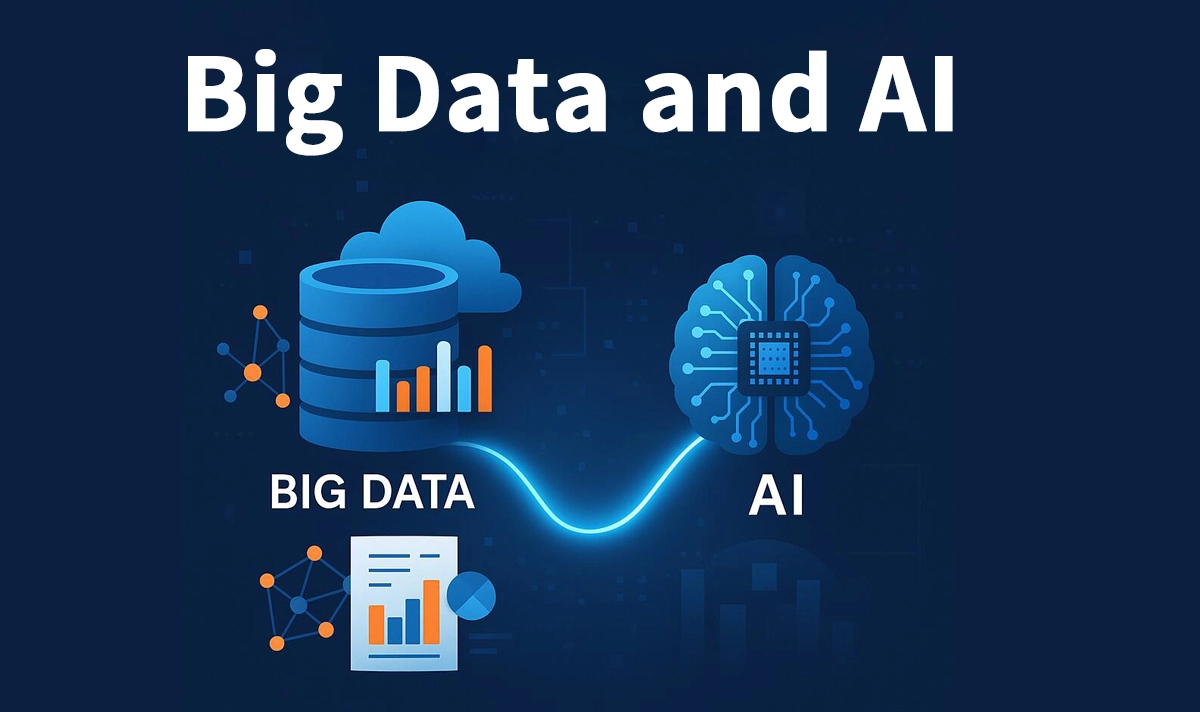
AI and Big Data Analytics in Scientific Research: Unlocking Deeper Insights

The fusion of Artificial Intelligence (AI) and big data analytics is transforming the landscape of scientific research, enabling researchers to explore complex datasets with unprecedented depth and speed. Modern experiments generate vast volumes of structured and unstructured data, from genomic sequences to environmental sensor readings, and analyzing this information manually is no longer feasible. AI-powered analytics tools provide the computational power and intelligent algorithms necessary to uncover patterns, correlations, and insights that were previously inaccessible.
By harnessing the combined capabilities of machine learning, predictive modeling, and advanced statistical analysis, researchers can accelerate discovery, optimize experimental design, and generate actionable insights with higher accuracy. The integration of AI and big data analytics is helping scientific communities move from data-rich to knowledge-rich environments, unlocking the potential for groundbreaking innovations across multiple disciplines.
Transforming Data Processing and Analysis
Traditional data analysis techniques struggle to manage the sheer volume and complexity of modern scientific datasets. AI algorithms excel at recognizing patterns, extracting meaningful information, and detecting anomalies within large datasets. By automating repetitive analytical tasks, AI reduces human error and allows researchers to focus on interpretation and innovation. This capability is particularly valuable in fields like genomics, particle physics, and climate modeling, where datasets often reach terabytes or even petabytes in size.
For example, in genomics, machine learning models can analyze millions of DNA sequences to identify genetic variations associated with diseases or traits. In climate science, AI processes satellite imagery and sensor data to detect subtle environmental changes and predict extreme events. These capabilities not only save time and resources but also enhance the precision and reliability of scientific conclusions.
Optimizing Experimental Design and Hypothesis Testing
AI and big data analytics improve experimental design by simulating outcomes, predicting potential results, and identifying the most promising research directions. Machine learning models can test numerous hypotheses in silico, reducing the need for costly or time-consuming physical experiments. This approach allows scientists to allocate resources more efficiently and focus on experiments with the highest likelihood of yielding meaningful results.
In pharmaceutical research, AI can model molecular interactions to suggest new drug candidates, predicting efficacy and side effects before lab testing. Similarly, in materials science, algorithms can simulate structural properties to identify optimal compounds for desired performance characteristics. By guiding experimental design, AI enhances productivity and innovation while reducing risk and uncertainty.
Discovering Patterns and Generating Insights
One of the most powerful applications of AI in scientific research is its ability to detect patterns hidden in complex datasets. Machine learning models can uncover subtle correlations and causal relationships that might elude traditional statistical methods. These insights can lead to new scientific hypotheses, innovative methodologies, and unexpected breakthroughs across disciplines.
For instance, AI models have been used to discover new biomarkers for diseases, identify climate change impacts on ecosystems, and predict chemical reactions in materials research. By automating pattern recognition and providing actionable insights, AI empowers scientists to make data-driven decisions and explore research questions that were previously unapproachable.
Challenges and Considerations
Despite the benefits, integrating AI with big data analytics in research poses challenges. Data quality, privacy, and interpretability are critical concerns. Large datasets often contain inconsistencies, missing values, or biases that can impact model accuracy. Researchers must carefully validate AI outputs and ensure that insights are reproducible and scientifically sound.
Additionally, ethical considerations must guide the use of AI in research, particularly in sensitive domains such as healthcare, genomics, and environmental studies. Transparency in AI models, accountability for predictions, and adherence to regulatory standards are essential for maintaining trust and credibility within the scientific community.
Conclusion
The integration of AI and big data analytics is revolutionizing scientific research by transforming data processing, optimizing experimental design, and uncovering new insights. Steiger Sciences leverages these technologies to help researchers unlock the full potential of complex datasets, accelerate innovation, and make data-driven discoveries that contribute to scientific advancement and societal progress. By embracing AI-driven analytics, the future of research is smarter, faster, and more impactful than ever before.