

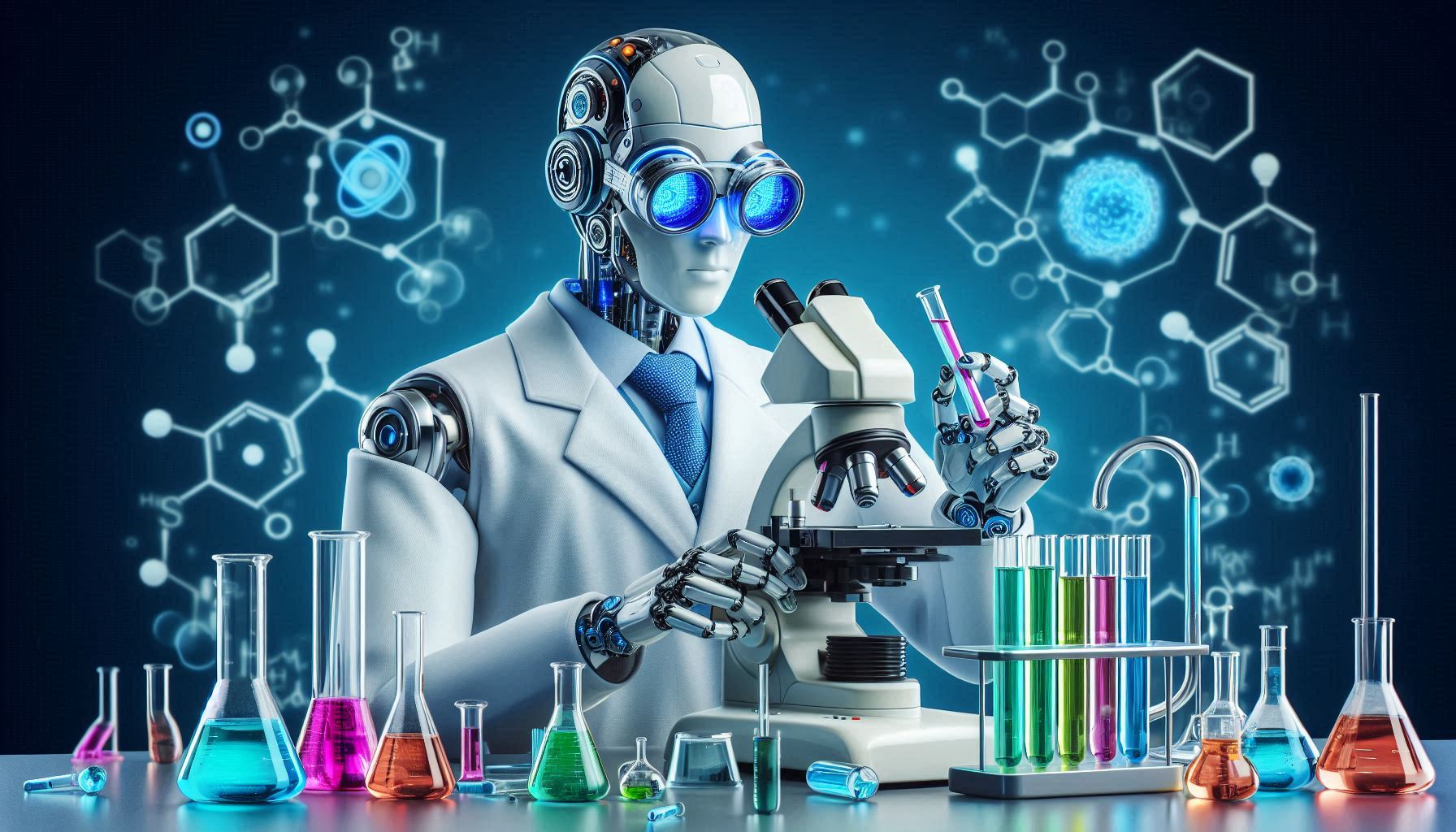
How Artificial Intelligence is Transforming Scientific Research

The intersection of artificial intelligence (AI) and scientific research is creating a paradigm shift in the way we explore, experiment, and understand the world. By combining sophisticated algorithms with vast datasets, researchers are now able to process information at speeds and scales that were unimaginable just a decade ago. AI is not merely a tool for automating mundane tasks; it has become an integral partner in hypothesis generation, experimental design, and data interpretation, allowing scientists to accelerate discovery across diverse disciplines.
From genomics to climate modeling, AI is being leveraged to uncover patterns and relationships that were previously hidden within complex datasets. Machine learning models can detect subtle correlations, predict outcomes, and simulate experimental results with high accuracy, empowering researchers to focus on innovation and strategic decision-making rather than repetitive data analysis. This transformation is redefining the very fabric of scientific methodology in the modern era.
Accelerating Data Analysis
One of the most profound impacts of AI on scientific research is its ability to process and analyze massive amounts of data with unprecedented efficiency. Traditional research methods often involve time-consuming statistical analysis and manual interpretation of results. AI-powered systems, particularly those employing deep learning and neural networks, can sift through millions of data points, recognize complex patterns, and generate meaningful insights in a fraction of the time. This capability not only saves valuable resources but also enables the exploration of datasets that were previously considered too vast or complex to analyze manually.
In fields such as genomics, AI algorithms can analyze DNA sequences and protein structures, identifying anomalies, potential mutations, or correlations with diseases that would have taken years to discover through conventional methods. Similarly, in environmental science, AI can process satellite imagery and sensor data to monitor climate change, predict natural disasters, and model ecological systems with remarkable precision. The result is a research process that is faster, more accurate, and far more capable of addressing complex, real-world problems.
Enhancing Experimental Design
AI is also transforming the way experiments are designed and executed. By simulating various scenarios and predicting outcomes, AI allows researchers to optimize experimental parameters before conducting real-world tests. This predictive capability reduces the need for trial-and-error experimentation, minimizing costs, and shortening research timelines. Scientists can leverage AI to identify the most promising pathways, focus on high-impact variables, and refine their methodologies with precision.
In pharmaceutical research, for example, AI models can predict how different compounds will interact with target proteins, helping scientists design more effective drugs while avoiding costly failures. In materials science, AI can suggest optimal material compositions or processing conditions to achieve desired properties. By providing actionable insights during the design phase, AI empowers researchers to conduct smarter, more efficient, and targeted experiments.
Discovering New Knowledge
Beyond accelerating data processing and refining experiments, AI contributes directly to the discovery of new scientific knowledge. Algorithms can identify previously unnoticed patterns, correlations, and causal relationships that human researchers might overlook due to the complexity or scale of the data. This capacity to uncover hidden insights is leading to breakthroughs in diverse fields such as astrophysics, molecular biology, and neuroscience.
For instance, AI-driven models have been used to predict protein folding structures, a challenge that puzzled scientists for decades. Similarly, in astrophysics, AI is capable of analyzing massive datasets from telescopes to identify rare celestial events or previously unknown exoplanets. By augmenting human intelligence with machine learning, AI is expanding the frontier of what is knowable and accelerating the pace of discovery across multiple scientific domains.
Ethical Considerations and Challenges
While AI brings tremendous potential to scientific research, it also introduces a range of ethical and practical challenges. Data privacy, algorithmic bias, and the transparency of AI-driven results are critical issues that researchers must address. Ensuring that AI models are interpretable and that their outputs are validated against rigorous scientific standards is essential for maintaining credibility and trust in the research process.
Moreover, as AI assumes a more prominent role in research, there is a need for clear guidelines regarding intellectual property, collaboration between human and machine intelligence, and the responsible deployment of autonomous systems. Addressing these challenges requires interdisciplinary cooperation and a commitment to ethical scientific practices, ensuring that AI serves as a force for positive advancement rather than unintended consequences.
Conclusion
Artificial intelligence is fundamentally transforming scientific research by accelerating data analysis, enhancing experimental design, and enabling the discovery of new knowledge. By integrating AI into the research workflow, scientists can achieve unprecedented levels of efficiency, insight, and innovation. Steiger Sciences embraces this transformation, exploring the synergy between human curiosity and machine intelligence to push the boundaries of discovery and contribute to a smarter, more innovative future.